
Joining as the Sole Design Voice
This was my foundational project in medical UX architecture. I led all end-to-end UX research, user flows, personas, wireframes, and screen design independently within an academic cross-disciplinary team:
- Dr. Sharon Zlotnik: Occupational Therapist & Lecturer (University of Haifa) - Clinical Lead & Domain Expert.
- Dr. Meira Levy: Senior Lecturer (Shenkar College) - Technology & Design Thinking Workshop Advisor.
- Prof. Irit Hadar: Head of Information Systems Department (University of Haifa).
What I owned end-to-end: User research, qualitative depth interviews, participant recruitment, transcriptions, user flows, persona engine, and full UI screen designs.
Redefining the Problem: It's Not Knowledge, It's Isolation
Our initial team assumption was that junior therapists suffered from a lack of clinical knowledge and required an instant answer search engine. However, two group sessions with occupational therapists - recruited via survey, run as academic research with the University of Haifa and Meuhedet HMO - distilled 4 core clinical themes:
- Patient collaboration and treatment onboarding
- Patient & family denial or lack of awareness
- Goal prioritization and task grading
- The execution gap between theoretical knowledge and real-world application
The clinical consultation data therapists need to discuss is highly sensitive medical information. They are legally and ethically restricted from sharing it - leaving them professionally isolated with nowhere to consult.
TAP TO ENLARGE
“Direct me to a forum like that - more people who were searching the same topic... that's actually peer learning.”
PARTICIPANT, GROUP SESSION
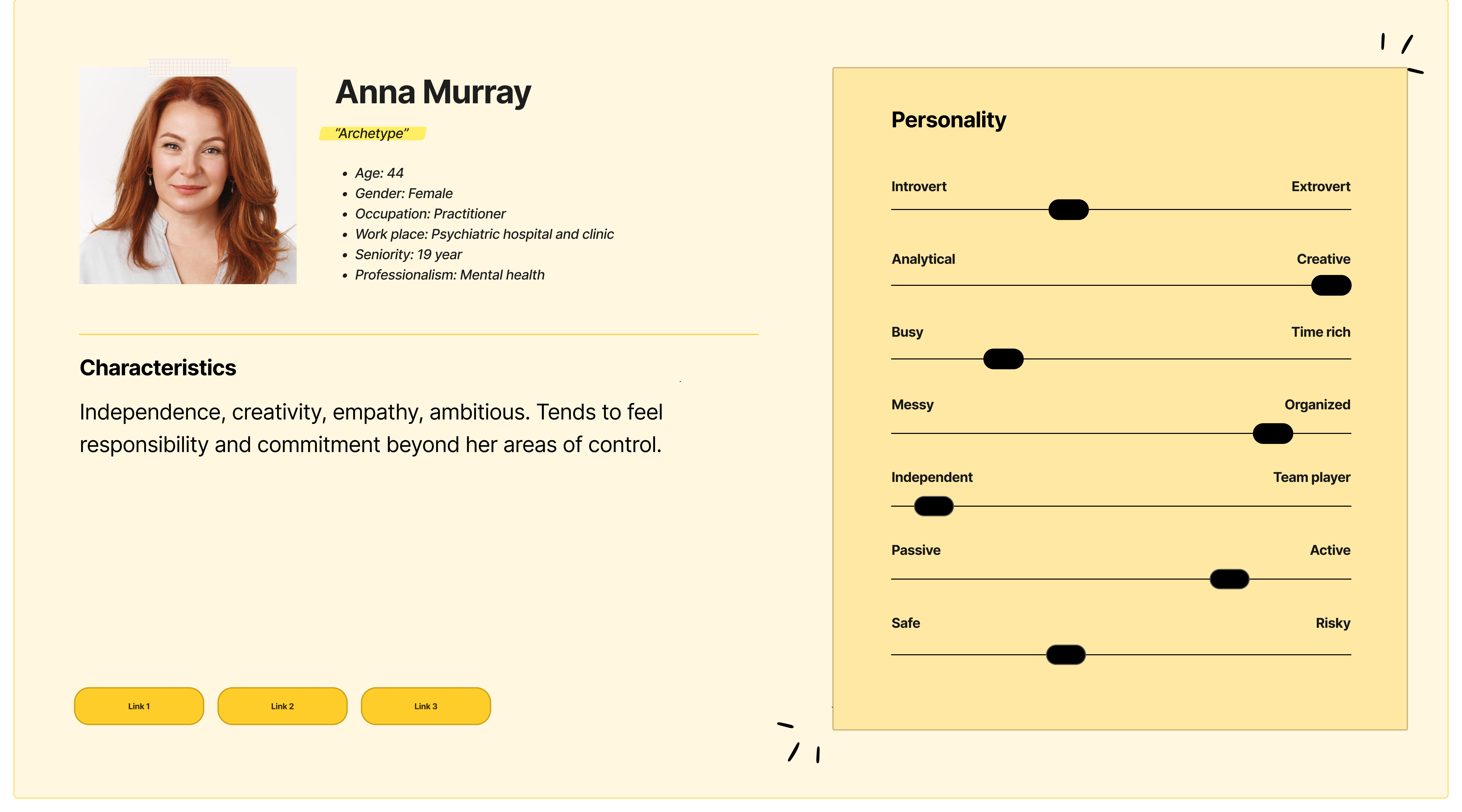
Anna, 19 Years of Experience - The True Persona
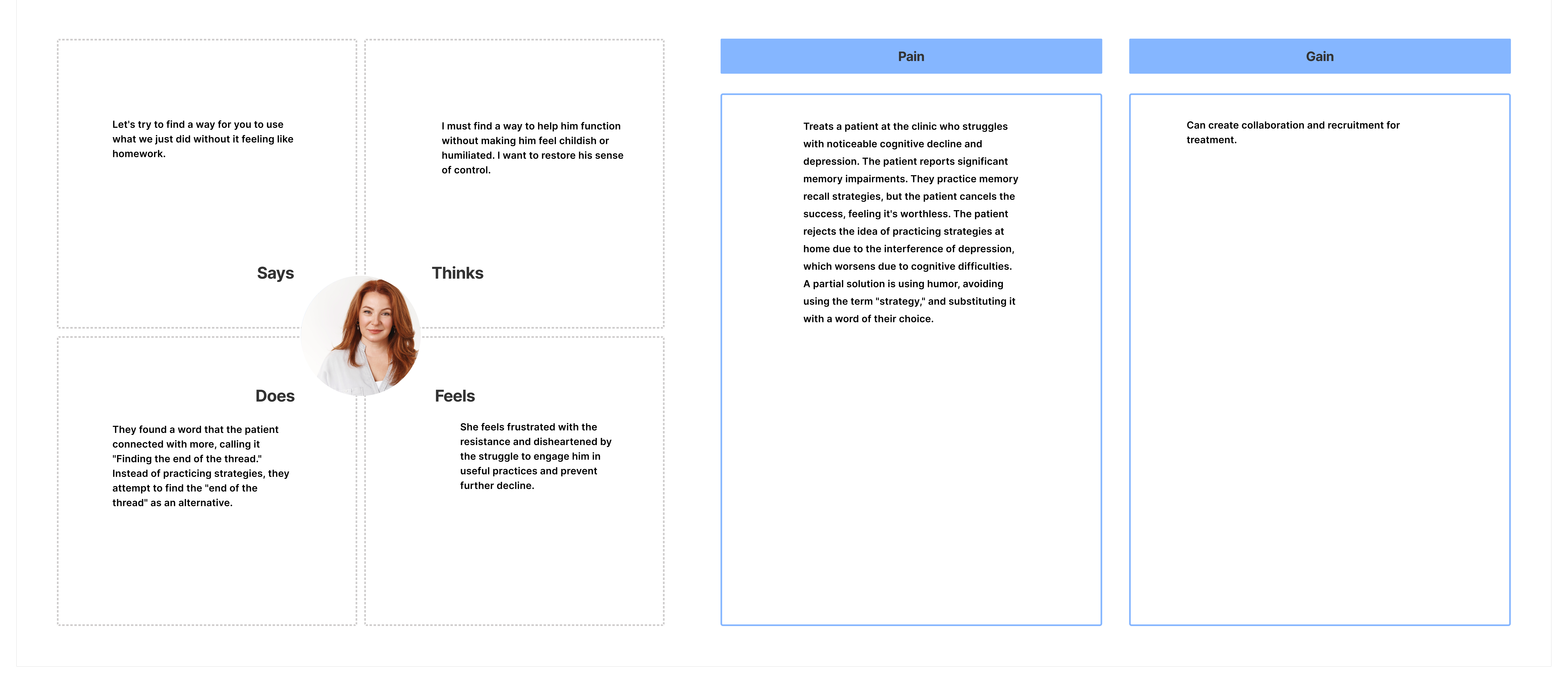
Professional burnout is not limited to beginners. Our primary persona, Anna (44 years old, 19 years of clinical experience), represents the experienced yet isolated clinician seeking a safe outlet after a difficult session.
“When I finish a session that didn't go as planned, I need a space to vent and think out loud - without exposing patient details and without admitting to a colleague that I'm unsure - so I can walk into my next patient with clear direction.”
TAP TO ENLARGE
Pushing for Qualitative Interviews Against Initial Skepticism
Qualitative research was not in the original academic scope. The committee initially sought theoretical survey responses. The team felt the survey, two group sessions, and Design Thinking Workshops already gave us enough - I pushed back, arguing we still didn't understand what occupational therapists actually needed. I designed the interview protocols, recruited participants, and manually transcribed 7 in-depth interviews myself.
Reading the interview transcripts completely transformed the team's perspective. It proved that qualitative depth reveals the true 'why' behind user behavior - a methodology I later spearheaded on Facts Commando.
The Turning Point: From Answer Engine to Reflection Engine
“An AI that mediates using questions and leads to investigation... rather than spoon-feeding answers.”
This single insight reshaped our entire product architecture: A therapist given an answer solves one single case. A therapist prompted with a reflective question becomes a better clinician. We shifted the AI behavior from an answer bot to a reflection engine.
Two Layers of Knowledge: Bot & Community
A standalone bot is insufficient for complete clinical confidence. We architected a dual-layer experience:
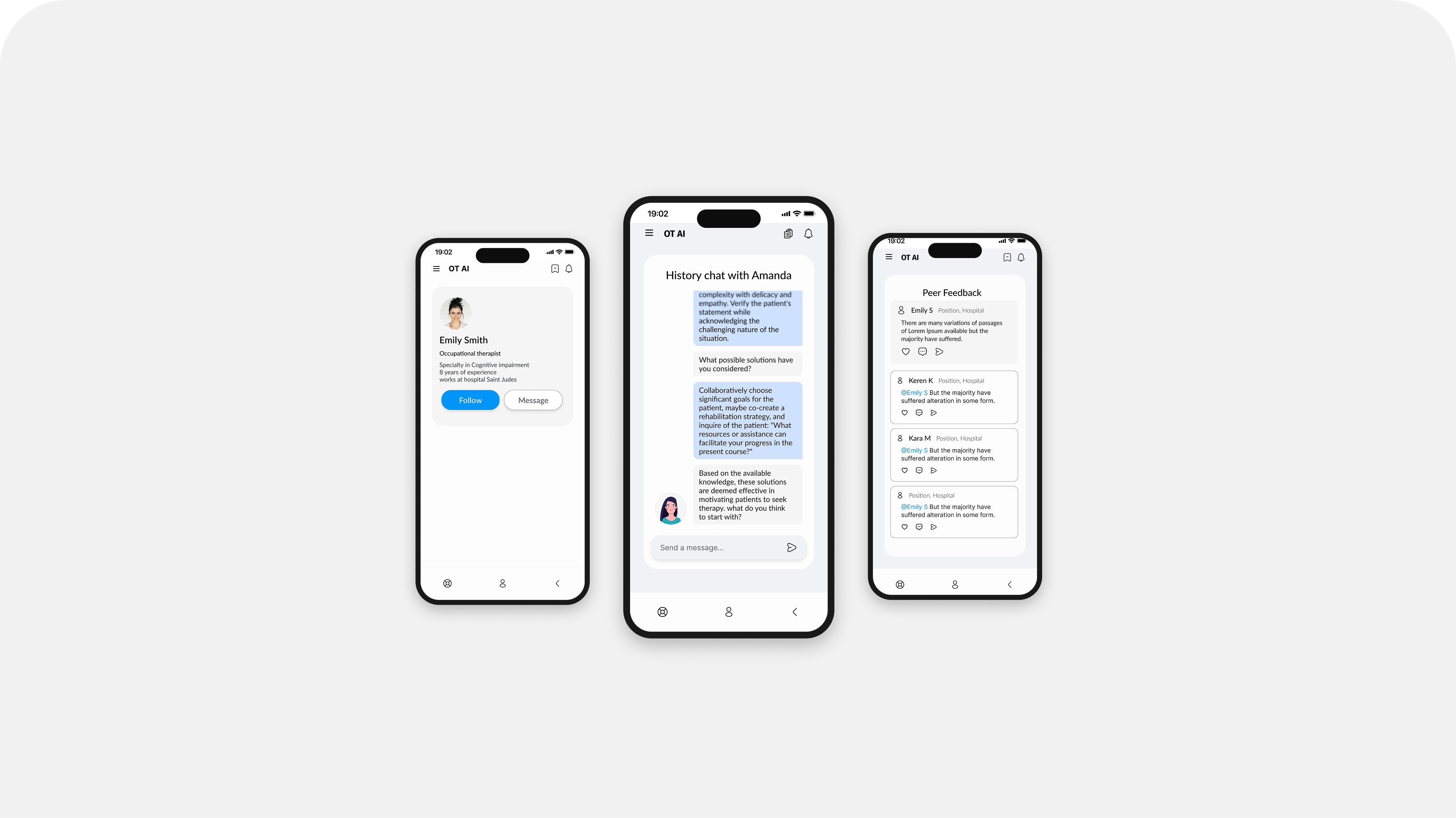
- The AI Bot: Private, real-time reflection with zero exposure.
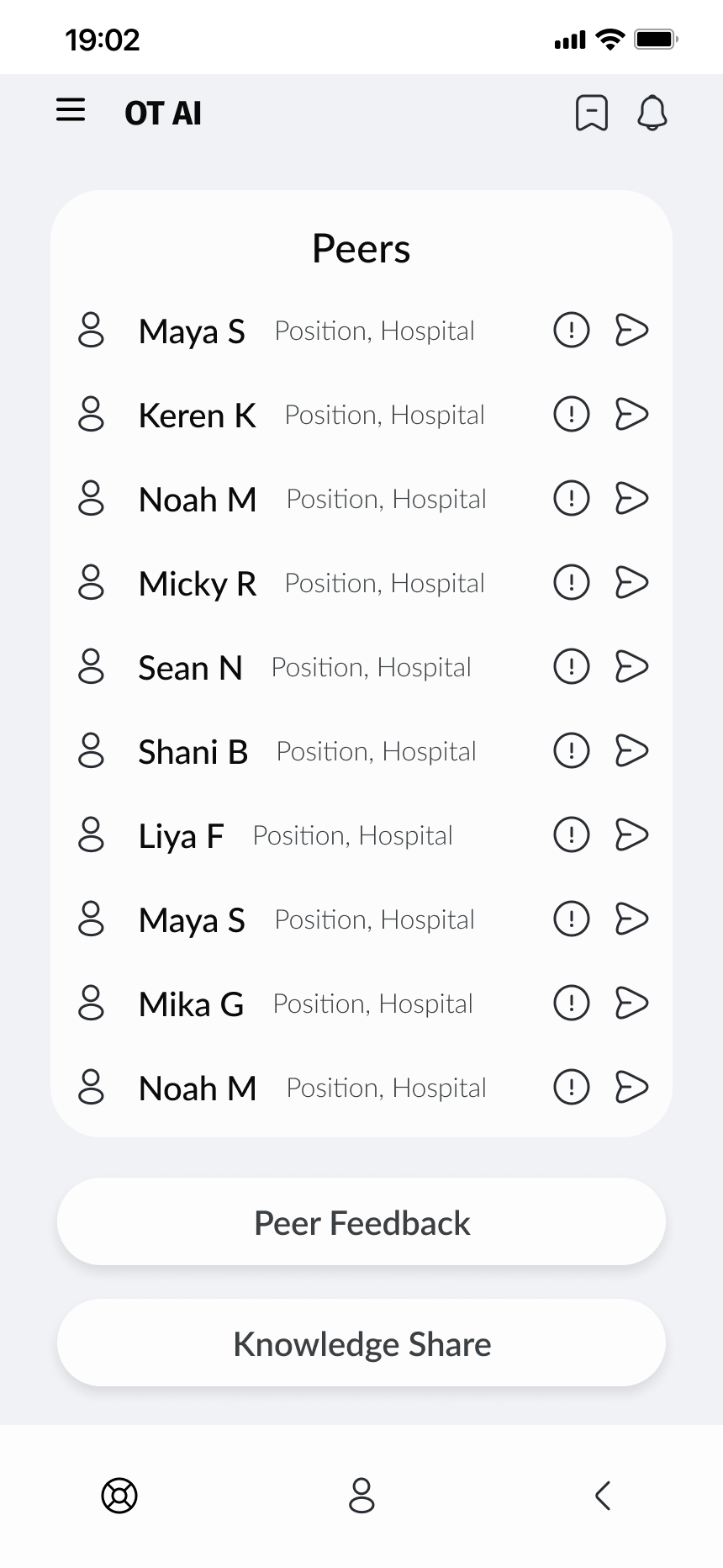
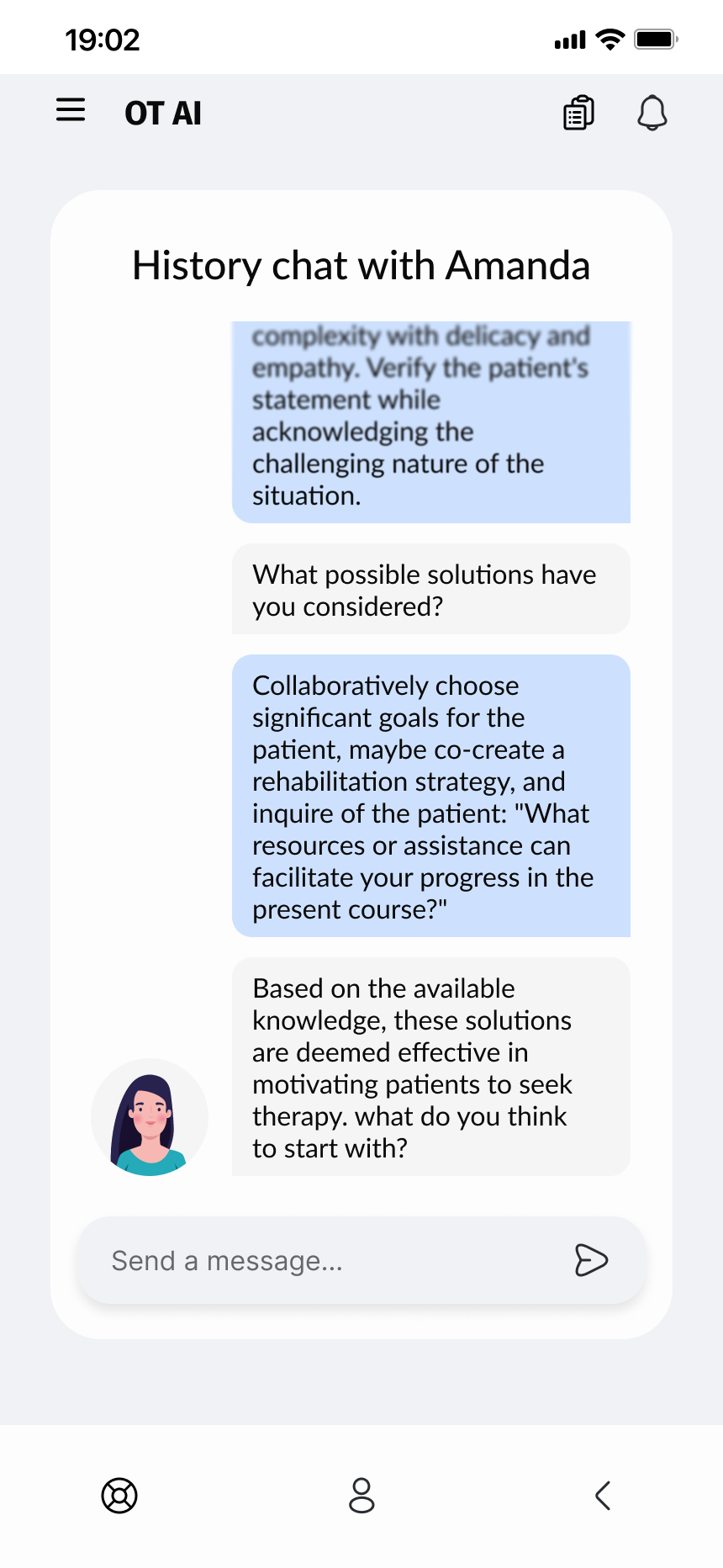
- Peer Community: Peer validation where clinicians can anonymously share entire bot chat sessions for expert feedback.
Partial anonymity by default was engineered as a core requirement to guarantee clinical privacy compliance and psychological safety.
TAP TO ENLARGE
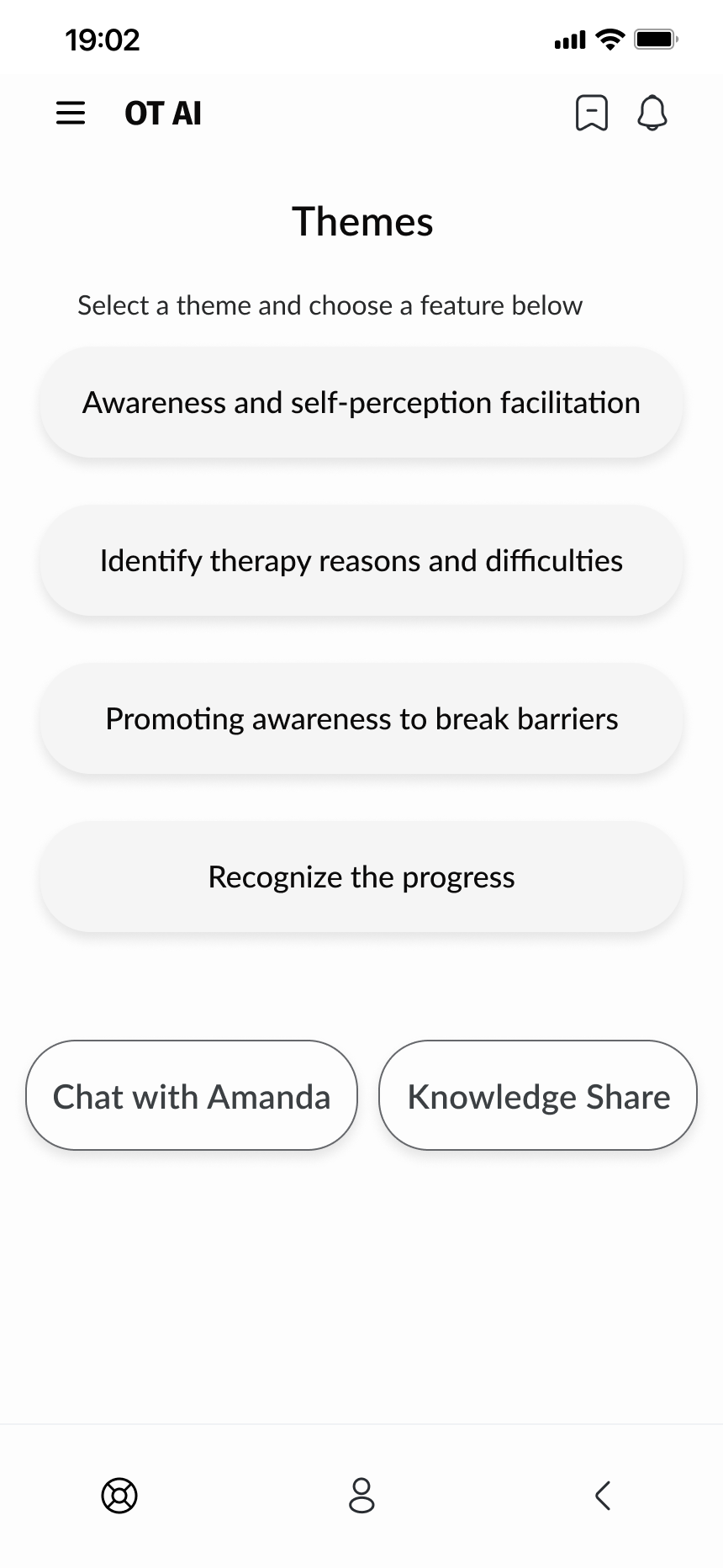
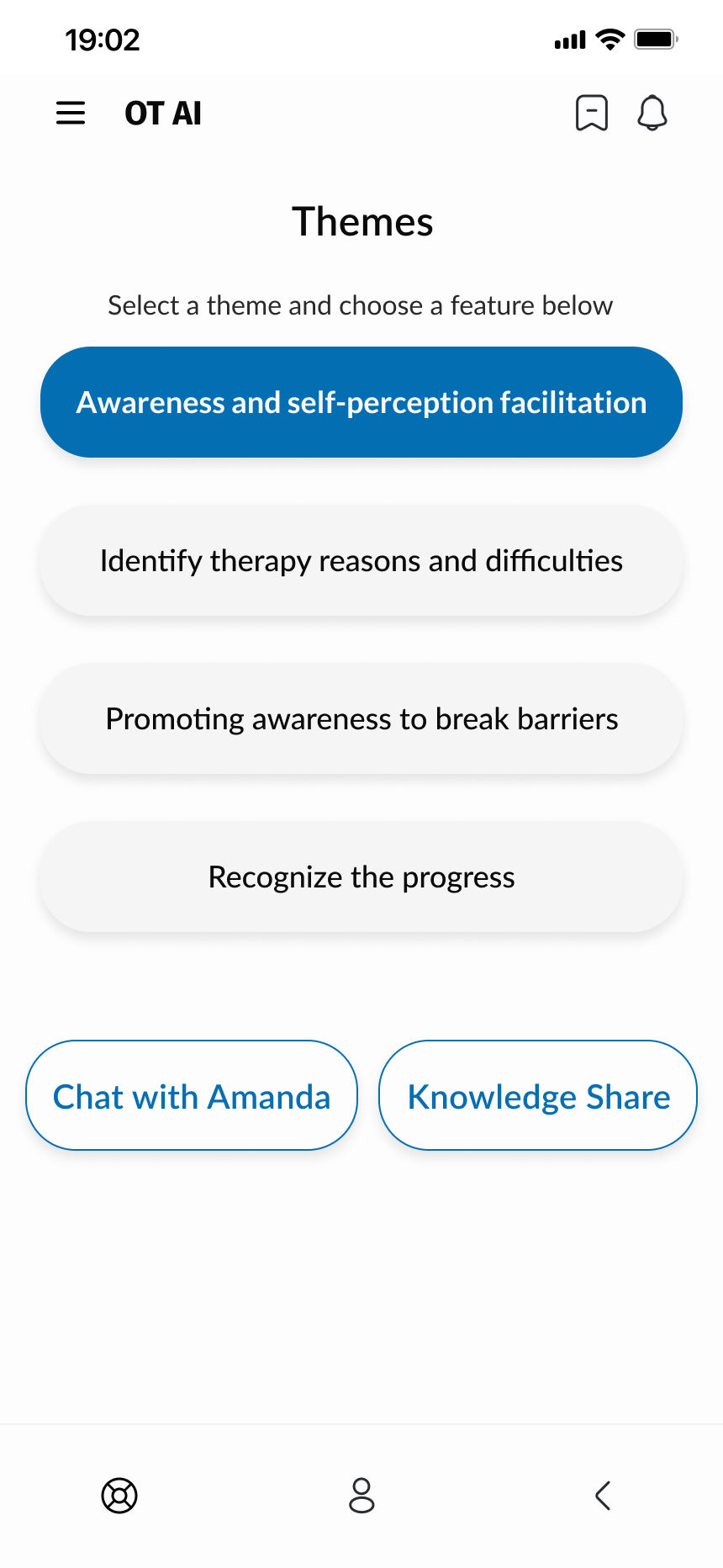
THE REST OF THE FLOW
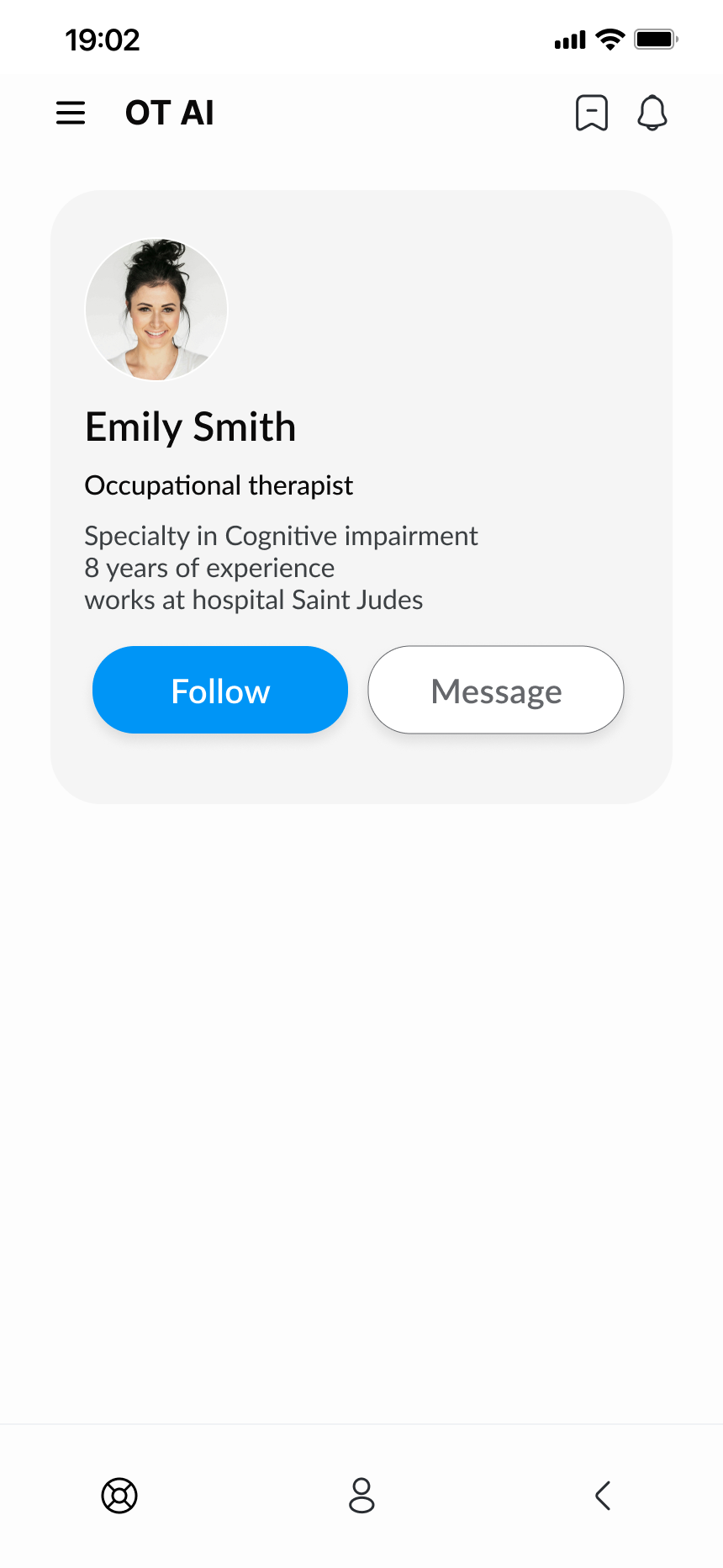
Research-to-Design Decision Mapping
| Research Finding | UI / Product Solution |
|---|---|
| “Don't spoon-feed answers” | Socratic AI bot that asks guiding questions before offering solutions |
| “Direct me to a peer forum” | Community layer with one-tap anonymous chat session sharing |
| Sensitive medical data & exposure fear | Partial anonymity enabled by default |
| Need for trusted peer network | Verified license registration flow restricted to certified OTs |
| Categories & difficulty levels | Theme selection upon entry to focus session scope |
What Survived: The Behavioral Logic Outlasted the UI
Between 2022 and 2025, AI technologies evolved rapidly. When the platform was built for production pilot testing, it was deployed as a custom GPT text assistant.
While the original GUI screens were streamlined into text interfaces, the core behavioral logic I specified - that the bot must ask reflective questions rather than give raw answers - shipped directly into production!
Returning to Measure Production Transcripts (2025–2026)
I was brought back to the project in late 2025 to analyze 36 live therapist interaction transcripts. Using Claude as an analytical assistant, I evaluated session quality across 8 clinical rubrics set by Dr. Zlotnik:
Key Takeaway: Qualitative Depth Breaks Assumptions
Quantitative surveys confirmed our existing assumptions. It was qualitative depth interviews that broke our mental models and transformed the product into a reflective engine.